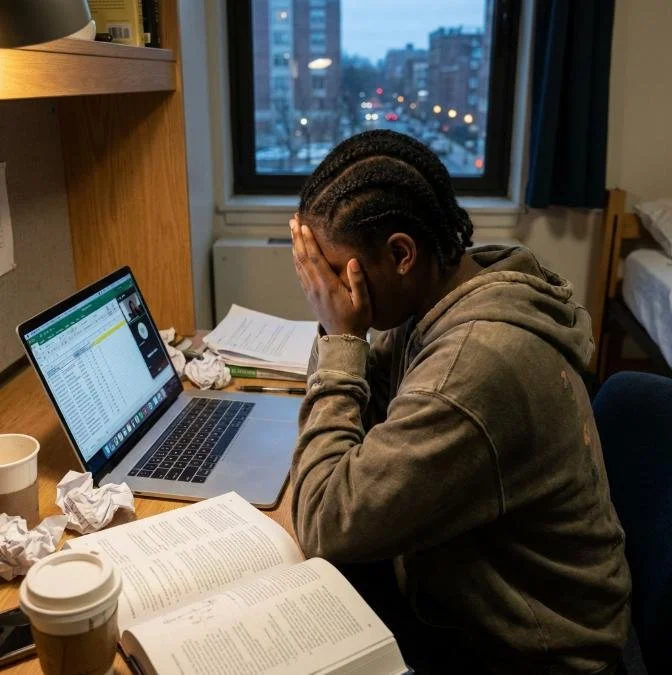
Social Anxiety at Work? Practical Coping Skills for NYC Professionals

Why Social Anxiety Can Be Especially Challenging in NYC Work Environments

For many NYC professionals, networking events, team meetings, presentations, and even casual workplace conversations can trigger significant anxiety. In a city known for ambition, competition, and constant social interaction, social anxiety can make work feel exhausting rather than fulfilling.

Social anxiety is more than shyness. It involves an intense fear of being judged, embarrassed, or negatively evaluated by others. Left unaddressed, it can impact career growth, workplace relationships, and overall well-being.

Signs of Social Anxiety in the Workplace

Social anxiety at work may look like:

Avoiding meetings or speaking up during discussions

Overthinking emails before sending them

Feeling panicked before presentations

Avoiding networking opportunities

Replaying conversations long after they happen

Worrying excessively about making mistakes

Difficulty asserting needs or setting boundaries

Many professionals become highly skilled at masking their anxiety, which can make it difficult for others to recognize how much distress they are experiencing internally.

Coping Skills for Managing Social Anxiety at Work

Challenge Negative Assumptions

People with social anxiety often assume the worst-case scenario.

Before a meeting or presentation, ask yourself:

What evidence supports this fear?

What evidence contradicts it?

What would I tell a colleague in this situation?

Learning to identify and challenge unhelpful thought patterns can reduce anxiety and improve confidence.

Focus Outward Instead of Inward

When anxiety rises, attention often turns inward. You may become hyperaware of your voice, appearance, or perceived mistakes.

Try redirecting your attention to:

The content of the conversation

What others are saying

The goals of the meeting

Genuine curiosity about colleagues

Focusing outward often reduces self-consciousness and helps you stay present.

Practice Gradual Exposure

Avoidance may provide short-term relief, but it tends to strengthen anxiety over time.

Instead, create small, manageable challenges:

Share one idea during a meeting

Ask a question during a presentation

Attend a networking event for 30 minutes

Initiate a brief conversation with a colleague

Small successes build confidence and reduce anxiety over time.

Use Grounding Techniques

If anxiety feels overwhelming, grounding exercises can help calm your nervous system.

Try:

Slow, deep breathing

Naming five things you can see, four you can touch, three you can hear, two you can smell, and one you can taste

Feeling your feet firmly on the ground before speaking

These techniques can help you stay connected to the present moment rather than getting caught up in anxious predictions.

When Therapy Can Help

If social anxiety is affecting your work performance, career opportunities, or quality of life, therapy can provide effective support. Evidence-based approaches such as Cognitive Behavioral Therapy (CBT), psychodynamic therapy, and other relational approaches can help individuals understand the roots of their anxiety while developing practical tools for managing it.

At Downtown Psychological Services, our therapists work with NYC professionals struggling with social anxiety, workplace stress, perfectionism, and self-doubt. Through therapy, many clients develop greater confidence, improve communication skills, and feel more comfortable showing up authentically in both their professional and personal lives. If you're ready to take the next step, we invite you to reach out for a consultation and learn how therapy can help.

Exercise and Mental Health: Why Movement Matters

The Connection Between Exercise and Mental Health

When people think about exercise, they often focus on physical health benefits like weight management, heart health, or building strength. But exercise can also be one of the most effective ways to support mental and emotional well-being.

Research has consistently shown that regular physical activity can help reduce symptoms of anxiety and depression while improving overall mood. Exercise stimulates the release of endorphins and other neurotransmitters, such as serotonin and dopamine, which play important roles in regulating emotions and creating feelings of well-being.

How Exercise Helps Reduce Anxiety

For individuals struggling with anxiety, exercise can help calm the body's stress response. Physical activity provides an outlet for nervous energy, reduces muscle tension, and can help interrupt cycles of worry and rumination. Many people notice that even a short walk can help them feel more grounded and clear-headed.

Exercise and Depression: Supporting Mood and Motivation

Exercise can also be beneficial for those experiencing depression. One of the challenges of depression is that it often decreases motivation and energy, making it harder to engage in activities that improve mood. While exercise is not a substitute for therapy or other treatment, regular movement can increase energy levels, create a sense of accomplishment, and contribute to improved emotional resilience over time.

Managing Stress Through Movement

Another important benefit is stress reduction. Daily responsibilities, work pressures, family obligations, and the fast pace of life can all take a toll on mental health. Physical activity gives the mind an opportunity to shift focus, release tension, and recharge.

You Don't Have to Be an Athlete to Benefit

The good news is that exercise doesn't have to be intense or time-consuming to make a difference. Walking, yoga, swimming, cycling, dancing, or any activity you enjoy can support mental wellness. Consistency matters more than perfection. Even 20 to 30 minutes of movement several times a week can have meaningful psychological benefits.

A Holistic Approach to Mental Wellness

At Downtown Psychological Services, we believe in a holistic approach to mental health. Therapy can help individuals better understand their emotions, develop coping skills, and navigate life's challenges, while healthy lifestyle habits such as regular exercise can further support emotional well-being. Together, these tools can help create a stronger foundation for lasting mental health.

Getting Started with Therapy

If you're struggling with anxiety, depression, stress, relationship challenges, or simply feeling overwhelmed, therapy can provide a supportive space to better understand yourself and develop effective coping strategies. At Downtown Psychological Services, our experienced therapists work collaboratively with clients to help them navigate life's challenges and build lasting emotional well-being. Reaching out for support is often the first step toward feeling better. Contact us today for a free consultation call to learn more about our services and get started on your therapy journey.

Afraid of the Subway, Bridges, or Elevators? How ERP Treats Specific Phobias in NYC

Specific Phobias in City Life: ERP Tips for Urban Anxiety

Living in a city like New York City means navigating subways, bridges, elevators, tunnels, and crowded buildings almost every day. For many people, these are routine parts of urban life. But for others, they trigger intense fear, panic, and avoidance.

At Downtown Psychological Services, we regularly work with clients struggling with specific phobias related to city life — fears that can quietly shrink your world and limit your independence.

The good news? These fears are highly treatable. One of the most effective approaches is Exposure and Response Prevention (ERP).

What Are Specific Phobias?

A specific phobia is an intense, persistent fear of a particular object or situation. In city environments, common phobias include:

Fear of the subway (claustrophobia, fear of being trapped, fear of panic)

Fear of bridges (often fear of losing control while driving)

Fear of elevators (fear of getting stuck or suffocating)

Fear of tunnels or enclosed spaces

Fear of crowded public transportation

These fears often involve catastrophic thoughts like:

“What if I panic and can’t escape?”

“What if I faint?”

“What if I lose control?”

“What if the elevator gets stuck and no one helps me?”

Over time, avoidance becomes the primary coping strategy — taking Ubers instead of the train, driving miles out of the way to avoid bridges, waiting endlessly for stairs instead of using elevators.

While avoidance reduces anxiety in the short term, it strengthens the phobia in the long term.

Why City Phobias Feel So Intense

Urban phobias often feel more overwhelming because:

The feared situation is unavoidable in daily life.

Escape feels limited (e.g., underground trains, bridge traffic).

The environment is stimulating and crowded.

There’s pressure to “function normally” despite anxiety.

In cities like New York, it can feel embarrassing to struggle with something “everyone else” seems to handle easily. But phobias are not a character flaw — they are a nervous system learning pattern.

And learning patterns can be changed.

What Is Exposure and Response Prevention (ERP)?

Exposure and Response Prevention (ERP) is a gold-standard treatment for phobias and anxiety disorders.

Exposure means gradually and intentionally facing the feared situation. Response Prevention means resisting the usual safety behaviors or avoidance strategies that keep the fear cycle going.

The goal is not to eliminate anxiety instantly. The goal is to retrain your brain to learn:

“This is uncomfortable — but it’s not dangerous. I can handle it.”

Here’s what ERP might look like in practice for Subways, Bridges, and Elevator Fears:

Build a Fear Ladder

You and your therapist create a hierarchy of feared situations, from least to most anxiety-provoking.

For example, with a subway phobia:

    Looking at photos of a subway platform

    Standing outside a station entrance

    Walking down the stairs without boarding

    Riding one stop during off-peak hours

    Riding multiple stops during rush hour

    Gradual exposure builds confidence step by step.

Drop Safety Behaviors

Safety behaviors feel protective but actually reinforce fear.

Examples:

    Only standing near subway doors

    Constantly checking for exits

    Avoiding eye contact

    Taking “rescue” medication preemptively

    Calling someone to stay on the phone during exposure

In ERP, we gently reduce these behaviors so your brain can fully learn that the situation is safe — even without crutches.

Stay Long Enough for Anxiety to Shift

Many people flee exposures when anxiety spikes. ERP teaches you to remain in the situation long enough for your nervous system to naturally settle.

Anxiety rises.
Anxiety peaks.
Anxiety falls.

This process builds tolerance and confidence.

Repeat, Repeat, Repeat

Repetition rewires fear. The more you practice, the less power the phobia has.

With consistent ERP work, clients often report:

Less anticipatory dread

Shorter panic spikes

Increased independence

A larger, freer daily life

Common Misconceptions About ERP

“Exposure sounds overwhelming.”

Good ERP is gradual and collaborative. You are never thrown into the deep end.

“What if I actually panic?”

Panic is uncomfortable — not dangerous. Part of treatment is learning that you can survive and recover from it.

“I should just push through on my own.”

While some people make progress independently, structured ERP with a trained therapist tends to be more effective and sustainable.

When to Seek Support

If your fear is:

Limiting where you go

Impacting your job or commute

Causing significant distress

Leading to complicated workarounds

Expanding to new situations

It may be time to seek professional support.

Specific phobias are among the most treatable anxiety disorders. With the right approach, meaningful change often happens faster than people expect.

City life should expand your world — not shrink it.

At Downtown Psychological Services, we specialize in evidence-based treatments for anxiety, and pull from Exposure and Response Prevention for specific phobias. Our therapists work collaboratively and compassionately to help you move toward the life you want — whether that means riding the subway confidently, driving across bridges without dread, or stepping into elevators without hesitation.

You don’t have to reorganize your life around fear.

You can reclaim your commute, your independence, and your city.

Looking for therapy for phobias in NYC? Fill out this form to schedule your free 10-15 minute phone consultation to learn more about treatment at Downtown Psychological Services.